Francais
 Cart
Cart Quote
QuoteHow to choose your foodservice plastic storage bin?
Cold rooms, preparation areas, dry storage, dishwashing areas, or catering transport... In the restaurant and foodservice industry, the plastic bin is ubiquitous. But faced with the strict requirements of the HACCP method and the intense pace of kitchens, how do you identify the container perfectly suited to your professional constraints?
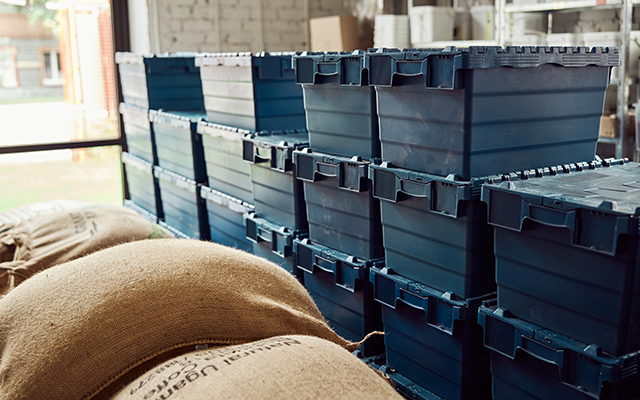
At Lobrot, we know that a poorly chosen container can compromise hygiene, slow down your teams, or degrade prematurely. Food contact, thermal resistance, space optimization: this guide decodes the essential criteria for equipping your establishment.
The golden rule: Food contact and hygiene (HACCP)
In the foodservice sector, this is the number one, non-negotiable criterion: any bin intended to hold unwrapped food (meats, vegetables, dough, liquids) must be food contact approved (glass and fork symbol).
For direct food contact, the plastic must imperatively be made of virgin material. Recycled plastics, although eco-friendly, cannot guarantee the absence of prior chemical residues and are strictly reserved for storing already packaged products (cans, bottles) or for general material handling.
Always prioritize bins with smooth walls and a flat bottom. The absence of nooks and honeycomb structures prevents the retention of dirt and bacterial growth, while facilitating professional dishwasher cleaning.
Understanding materials: Extreme temperatures and robustness
Your bin will go from a sub-zero cold room to the heat of the dishwashing area. The choice of polymer is therefore strategic:
- High-Density Polyethylene (HDPE): The star of the kitchen. It perfectly resists impacts, food acids (vinegar, lemon), and especially extreme temperatures (-40°C for deep freezing to +90°C for washing). Ideal for meat and cold rooms.
- Polypropylene (PP): Very resistant and shape-retaining, it withstands heat well but can become brittle below 0°C. Perfect for dry storage (flour, spices) or preparation at room temperature.
The standard format: 600x400 bins (Euro-norm)
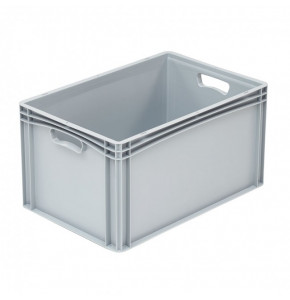
While the Gastronorm (GN) dimension rules in display cases and ovens, the Euro-norm bin (600x400 mm) is the king of cold room storage and bakery/pastry shops.
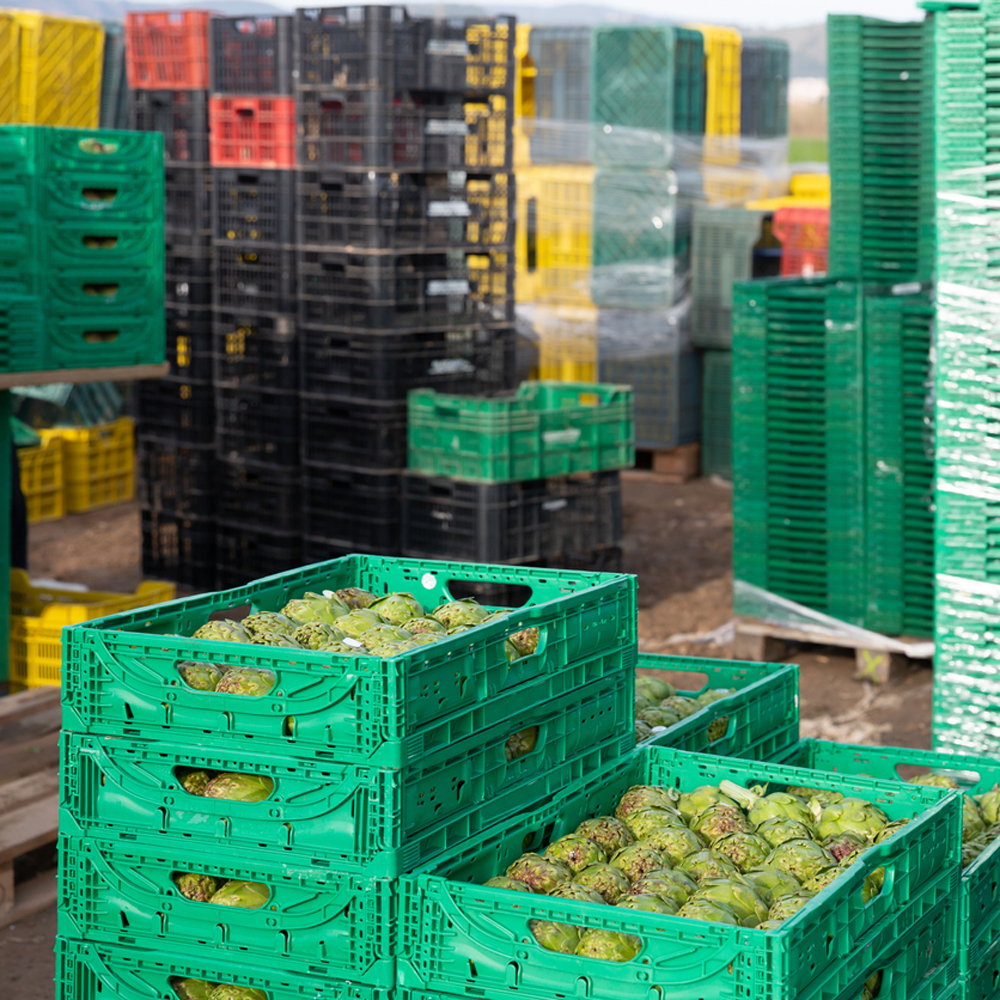
How to configure your 600x400 bin?
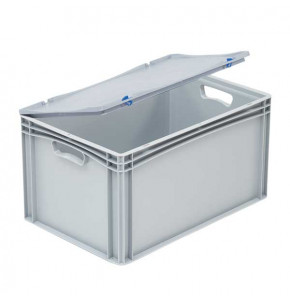
- Solid bottom and walls: Essential for liquids, meats, dough, or preparation. They guarantee perfect hygiene and prevent leaks.
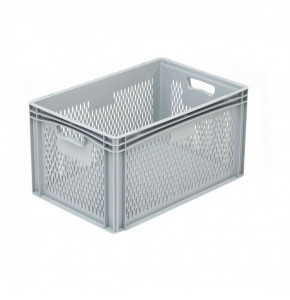
- Perforated bottom and walls: Recommended for storing fruits and vegetables or cheeses. Ventilation prevents condensation and extends the shelf life of fresh products.
- The choice of handles: Closed handles (shell) guarantee total sealing (no dust enters), while open handles facilitate carrying heavy loads (catering, supplies).
A bin for every profession: Foodservice specificities
Each station in the kitchen has very specific needs. Here is the essential equipment depending on your activity:
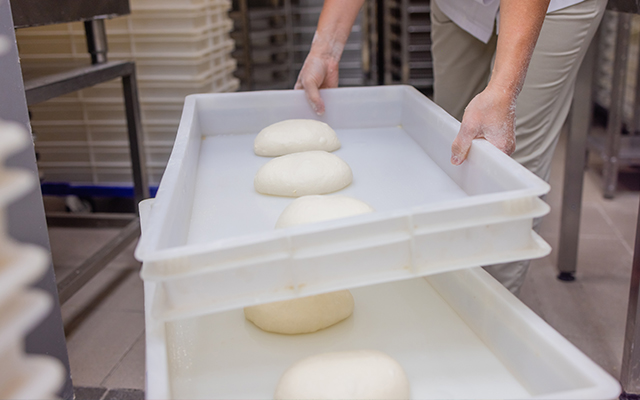
Bakery & pizzeria
- Dough trays: White, shallow, with a perfectly flat bottom. They stack for controlled dough proofing protected from the air.
- Ingredient bins on wheels: To store flour or sugar in large quantities under workbenches.
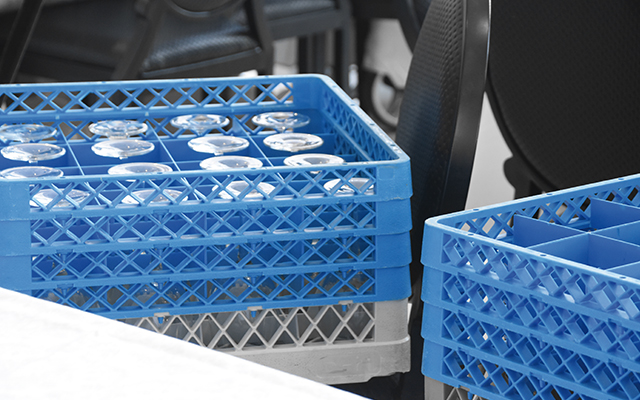
Dishwashing & washing Area
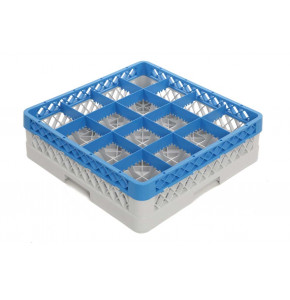
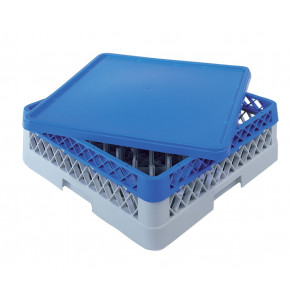
- Washing racks: Standard sizes (often 500x500 mm).
- Compartmentalized for glasses (prevents breakage), pegged for plates, or with a flat perforated bottom for cutlery. They resist industrial detergents and high temperatures.
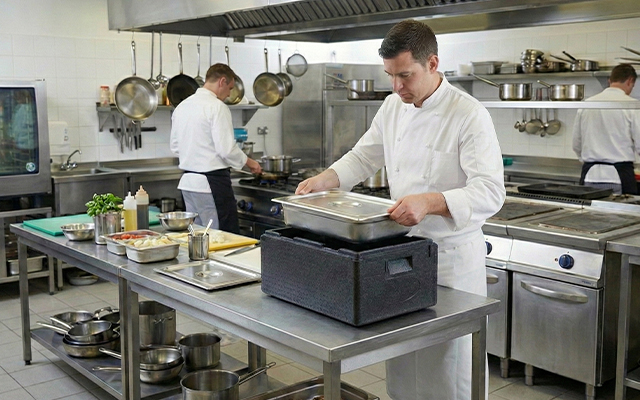
Catering & events
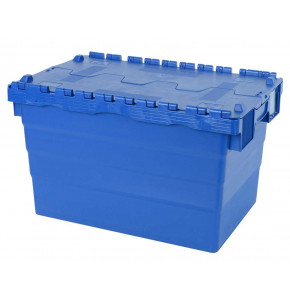
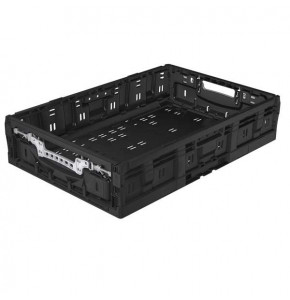
- Stackable / nestable bins: They stack when full during transport (with a lid) and nest when empty on the return trip for a 70% space saving in the truck.
- Insulated containers: For strict compliance with the hot or cold chain during deliveries.
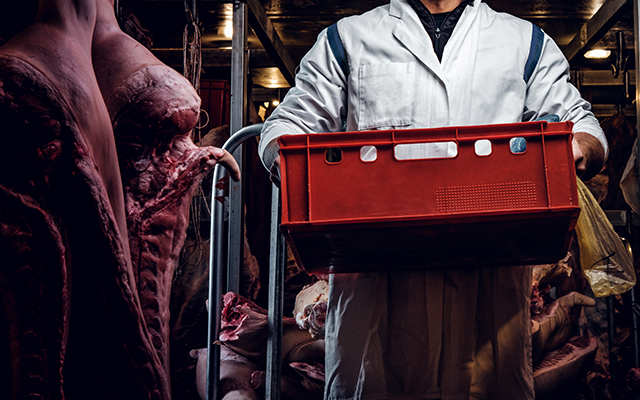
Cold Room & prep Kitchen
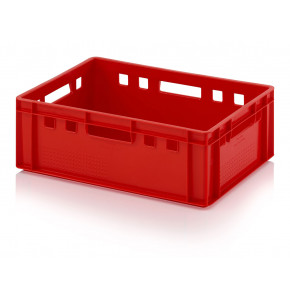
- Meat bins / Agricultural bins: Robust, often red or white to avoid cross-contamination.
- Compatible with freezing and deep-freezing without becoming brittle.
Managing stacking: Safety and space saving
In cold rooms or dry storerooms where space is limited, stacking is the rule. Make sure to choose bins with reinforced rims. The stacking load capacity indicates the total weight that the bottom-most bin in the stack can support without deforming. Don't forget to add drop-on lids to protect food from cross-contamination when stacking.