Francais
 Cart
Cart Quote
QuoteLinen management in the hotel industry: an invisible pillar of service quality
In the hotel industry, linen is omnipresent but rarely highlighted, except when it is lacking. For guests, immaculate sheets, perfectly clean towels, and soft bathrobes are non-negotiable standards. However, behind the scenes, linen management represents a major operational, health, and organizational challenge for housekeepers and hotel managers.
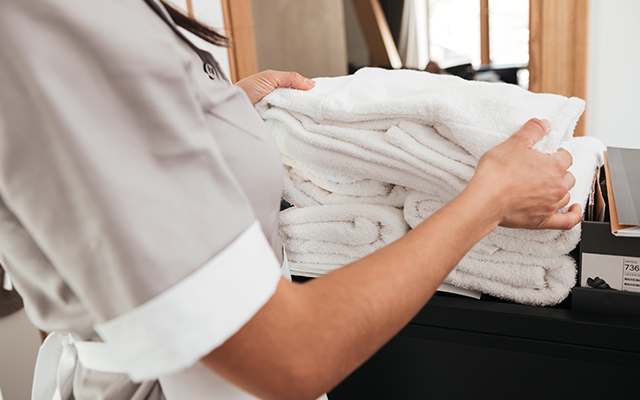
Approximate management quickly leads to visible consequences: stock shortages during peak season, workload overload for housekeeping teams, cross-contamination risks, and, ultimately, a degradation of the guest experience. Conversely, a controlled organization of the linen cycle, supported by suitable equipment, directly contributes to perceived quality, health safety, and the global profitability of the establishment.
The linen cycle: Thinking in flows, not accumulation
To be effective, linen management must not be thought of as storage, but as a continuous flow. The goal is fluidity.
Strictly separate clean and dirty linen
The first fundamental rule, inspired by the RABC method (Risk Analysis and Biocontamination Control), relies on the physical and functional separation of flows. Soiled linen, carrying biological contaminants (cells, bacteria) and humidity, must never cross paths with clean linen.
This separation implies logistical rigor:
- Identified zones: Clearly delimit areas for collection, sorting, washing, and clean storage.
- Distinct circuits: Apply the "forward motion" principle. Soiled linen must never return toward the clean zone.
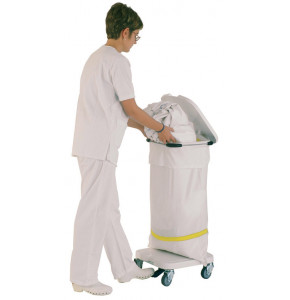
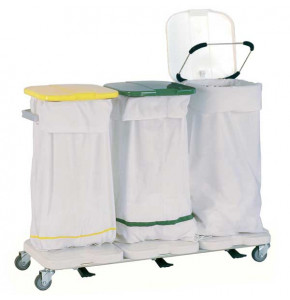
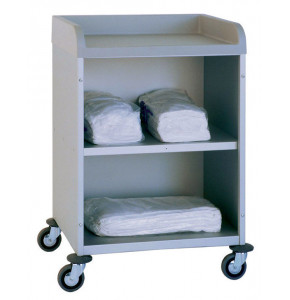
- Dedicated equipment: Use specific carts for soiled linen (often equipped with canvas or removable plastic bags) and different carts (shelving, mobile cabinets) for clean linen.
Organizing collection on the floors
Linen collection in rooms is a critical and often strenuous step for housekeeping staff. Inefficient organization leads to fatigue, wasted time, and visual clutter in hallways that can harm the hotel's image.
Best practices for optimizing collection:
- Sorting at the source: Equip housekeeping carts with sorting bags (terry vs. sheets) to avoid re-sorting later.
- Ban floor placement: Absolutely avoid temporary deposits of soiled linen on the floor or in guest circulation areas. This conveys a dubious hygiene image and forces staff to bend down unnecessarily.
- Group by zone: Structure collection by wing or by floor to limit the movement of large collection carts.
Structured collection significantly reduces the physical strain on teams while preserving the establishment's standing.
Hotel laundry: Hygiene, safety, and daily efficiency
Whether linen is processed internally or outsourced, the transit zone or laundry room must be a model of organization.
Linen sorting: An often underestimated step
Sorting allows wash cycles to be adapted (temperature, detergents, mechanical action) and prevents premature textile degradation. A cotton sheet is not washed the same way as a terry robe.
Effective sorting must take into account:
- Type of linen: Sheets, towels, tablecloths, bathrobes.
- Soil level: Isolate heavily soiled linen for specific treatment.
- Sanitary constraints: Damp linen must be treated quickly to prevent mold development (mildew).
Reducing occupational risks in the laundry
The laundry room concentrates several major hardship factors for staff: heavy and repetitive loads, awkward postures (stooping), and a hot, humid environment.
Workstation organization and equipment choice are crucial for preventing MSDs (Musculoskeletal Disorders):
- Reduce load carrying: Prioritize spring-loaded carts (constant level) that keep linen at hand height, preventing the operator from bending into the bottom of the bin.
- Facilitate rolling: Opt for carts equipped with industrial-quality wheels to limit pushing effort.
- Optimize space: Keep work zones clear to avoid contortions and accidents.
Clean linen storage and distribution: Guaranteeing availability
Having clean linen is one thing; having it available at the right time and place is another.
Anticipating activity peaks
Weekends, events, high season: linen consumption is never linear. Effective management relies on forecasting needs and accurately calculating the "par stock."
Key points for stock management:
- The buffer stock: It is recommended to have at least 3 sets of linen (one in the room, one in "clean" stock, one in the wash).
- Reactivity: Quickly identify critical levels to trigger washes or orders from service providers.
- Avoid overstocking: Too much linen clutters storage areas, gathers dust, and complicates inventories.
Maintaining quality up to the room
Once washed and ironed, clean linen is vulnerable. It must be protected until its final use by the guest:
- Closed storage zones: Linen closets or storage rooms must be clean and dry.
- Protection during transport: Use closed carts or covers to protect linen from dust and humidity during transit in hallways or via service elevators.
- Limited handling: The less clean linen is touched, the more hygienic it remains.
Linen management as a lever for hotel performance
Beyond hygiene, rigorous linen management is a lever for profitability. It allows for:
- Better coordination between the housekeeping department and the laundry.
- Reduction of losses (theft, tears) and an increase in textile lifespan.
- A reinforced professional image for guests who encounter carts in the hallways.
- Better working comfort for teams, reducing absenteeism linked to physical pain.
Towards a sustainable and professional organization
Optimizing linen management in the hospitality industry does not rely on a single solution, but on a combination of best practices and adequate equipment.
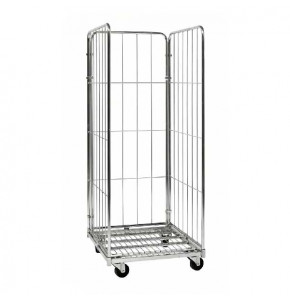
By implementing clear circuits and well-identified functional zones, and by equipping your teams with ergonomic gear (sorting carts, roll cages, mobile tubs), you transform a logistical constraint into a real asset. Linen then becomes a controlled flow, integrated into a global approach to quality, benefiting both your guests and your teams.