Francais

 Cart
 Quote
Equipping your professional kitchen in an environmentally responsible way: the hospitality sector guide
Long-lasting chopping boards, food containers certified for food contact, trolleys made from sustainable and recyclable materials… The commercial catering sector has long been seen as one that is not particularly compatible with an environmental approach. Those days are over. Today, it is possible to fit out a professional kitchen from top to bottom with eco-friendly products, without compromising on hygiene, durability or performance.

Why adopt an eco-responsible approach in the hospitality industry?
In the Hotel, Restaurant, and Catering (HoReCa) sector, regulatory pressure and customer expectations are pushing establishments to rethink their purchasing practices. A coherent CSR strategy does not stop at energy savings or waste sorting in the dining room: it begins in the kitchen, when choosing equipment.
Opting for eco-designed equipment means:
- Respecting regulatory developments that increasingly govern food contact materials and professional waste management.
- Reducing resource consumption by choosing durable products that withstand intensive use rather than frequently replacing disposable equipment.
- Enhancing your brand image with a clientele that is increasingly attentive to the environmental commitments of the establishments they visit.
- Achieving long-term savings: quality equipment, designed to last, costs less over its lifespan than repeated purchases of low-end products.
Materials: knowing how to read the labels
Not all "green" products are created equal. In a professional kitchen, several criteria help identify truly eco-responsible equipment.
HDPE: virgin for food contact, recyclable at the end of its life
High-Density Polyethylene (HDPE) is ubiquitous in the hospitality sector: cutting boards, food storage bins, pizza dough boxes...
The eco-responsible advantage of HDPE therefore lies elsewhere: it is fully recyclable at the end of its life. A used cutting board or virgin HDPE bin can be collected and reintegrated into a recycling channel to produce non-food equipment (street furniture, industrial equipment, etc.). This is the circular economy applied to catering equipment.
When purchasing, the Möbius Loop on the packaging confirms the product's recyclability at the end of its life.
Stainless steel, the ultimate durable material
Stainless steel gastronorm pans, kitchen utensils, and service trolleys are benchmarks for durability. Stainless steel does not degrade, does not retain bacteria, withstands high-temperature machine washing, and does not require frequent replacement. It is a long-term investment that mechanically reduces waste production linked to equipment renewal.
Note: Stainless steel is 100% recyclable. At the end of their life, the equipment can be recovered as secondary raw material without any loss of quality.
FSC or PEFC certified wood
Wooden cutting boards, spoons, spatulas, and natural wood kitchen utensils remain very present in professional kitchens—and rightly so. Wood is a renewable, biodegradable, and naturally antibacterial material for certain species.
To ensure the wood used comes from a sustainably managed forest, look for FSC (Forest Stewardship Council) or PEFC (Programme for the Endorsement of Forest Certification Schemes) certifications. These labels guarantee wood traceability, forest biodiversity protection, and respect for local populations.
Eco-responsible hospitality equipment to prioritize
Cutting boards: lifespan and materials
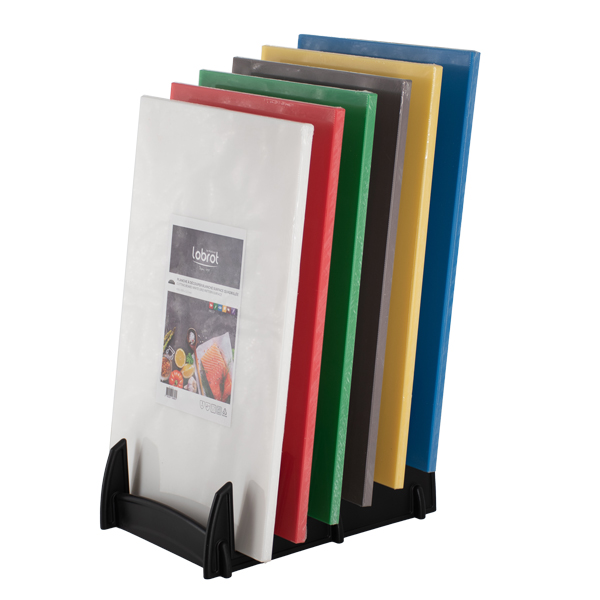
The cutting board is one of the most consumable items in a professional kitchen. Choosing a quality, thick, and dishwasher-safe HDPE board means multiplying its lifespan by five or ten compared to a low-end board.
The HACCP color code (white, red, yellow, green, blue, brown) helps limit cross-contamination risks and avoids premature replacement due to a lack of traceability.
View our cutting boards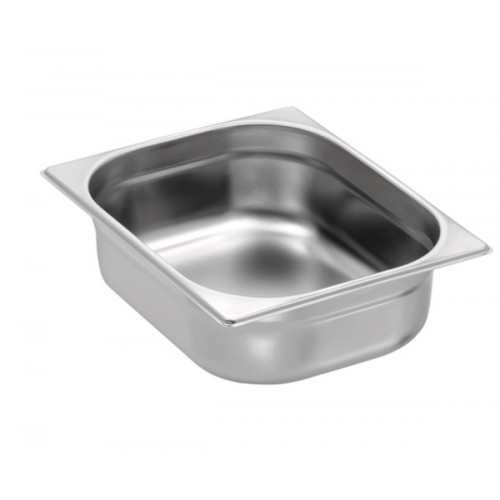
Gastronorm and storage pans
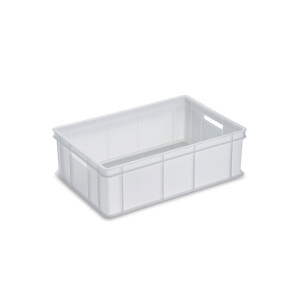
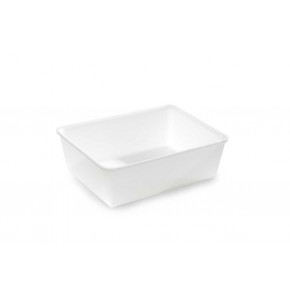
Polypropylene or virgin HDPE bins used for food storage are washable, stackable, and designed for thousands of use cycles. They provide a sustainable and hygienic alternative to disposable containers.
Stainless steel gastronorm pans offer even greater longevity. The same pan can be used for preparation, refrigerated storage, service, and storage thus reducing the total number of required equipment.
View our food pans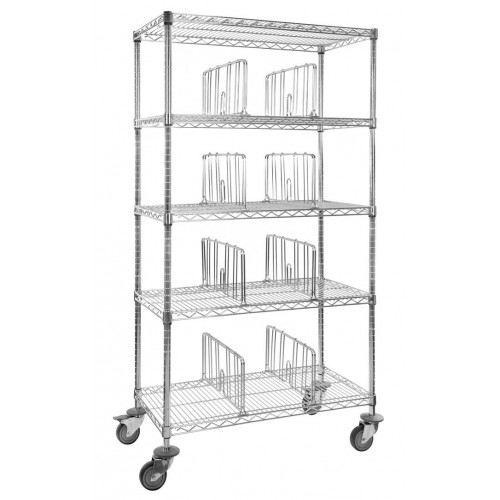
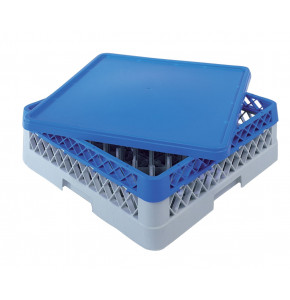
Trolleys and laundry equipment
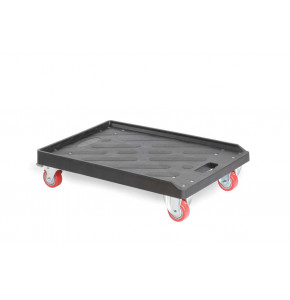
A well-chosen laundry or service trolley, built in anodized aluminum or chromed steel, can accompany an establishment for ten to fifteen years. Material robustness and ease of maintenance are the key criteria.
Avoid low-end plastic trolleys that crack quickly. An initial investment in a professional model results in a net reduction in the amount of waste produced over time.
View our professional trolleysLabels to know for responsible purchasing in the hospitality industry
| Label | What it certifies | Relevant for |
|---|---|---|
| European Ecolabel | Reduced environmental impact over the entire life cycle | Cleaning products, packaging |
| FSC / PEFC | Wood from sustainably managed forests | Wooden boards, utensils |
| EC 1935/2004 | Food contact compliance | Pans, boards, containers |
| Möbius Loop | Product or packaging recyclability | Plastics, packaging |
| NF Environnement | French environmental performance standard | Various equipment |
Buying eco-responsibly also means buying smart
In a professional kitchen, eco-responsibility should never come at the expense of performance. A pan that warps after the first wash, a board that cracks in two months, or a trolley whose wheels fail after six weeks are not responsible purchases even if they display a label.
The true eco-responsible approach in the hospitality industry combines three criteria: material quality, durability over time, and compliance with health standards. Equipment that lasts means fewer consumed resources, less produced waste, and lower replacement costs. This is the meaning of a truly virtuous professional purchase.
At Lobrot, we select hospitality equipment designed to last, compliant with European food standards, and adapted to the intensive use conditions of professional kitchens.
Discover our hospitality catalog